DEFINITIONS OF ROOFTOP SOLAR TERMS FROM CERC OF INDIA:
Photo Voltaic (PV) Module: An assembly of Photo Voltaic (PV) cells mounted in a framework use sunlight as a source of energy to generate direct current (DC) electricity. Solar PV String Inverter: A static power conversion device that converts DC electricity into AC electricity by performing the process of maximum power point tracking (MPPT). Installed capacity: The sum of name plate capacities (Nominal AC power) of the inverters of the project. Capacity Utilization factor (CUF): The ratio of total kWh (units) of power generated by Solar Plant in a year and Contracted capacity in kW multiplied with Number of hours in the same Year. (Normative minimum CUF 21). Useful Life: The useful life of an asset, often called the service life, is the length of time an asset can be productively used in operations. (Normative Useful life of Solar PV system is 25 years)
SELECTION CRITERIA OF ROOF TOP SOLAR PV SYSTEM:
Sizing of the rooftop solar PV system mainly depends on Contracted load of the consumer service connection. South facing Shadow free terrace area. Annual average energy consumption. Selection of the Solar PV String Inverter is No of phases, Voltage and Frequency of the Local Grid. No. of MPPT inputs. Startup / Minimum Feed in Voltage. Nominal / Rated PV input Voltage Power output(Wp) of the Rooftop solar PV system. Selection of the Solar PV Modules is Normal Operating Cell Temperature (NOCT).
Temperature Co efficient Open Circuit Voltage (Voc) at Normal Operating Cell Temperature (NOCT). Power output (Wp) at Normal Operating Cell Temperature (NOCT).
SIZING OF THE PV ARRAY
Solar PV Modules performance generally determined by power, current and voltage ratings. All the Solar PV Module manufacturers provide the performance parameters at Standard Test Conditions (STC) i.e Temperature 25º C, Air Mass Coefficient 1.5, Insolation 1000W/m2 However, the performance of the Solar PV Modules greatly degraded by real world operating conditions as mentioned below
11. Global Horizontal Irradiance
2. Albedo
3. Ambient Temperature
4. Relative Humidity
5. Barometric Pressure
6. Precipitation
7. Wind Speed
8. Soiling
9. Wind Direction
10. Plane of Array
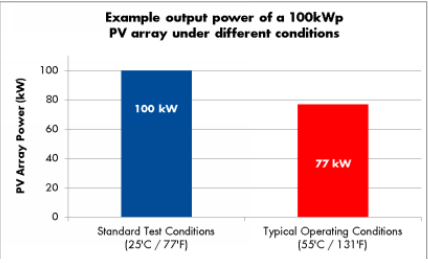
- 1:1 DC / AC ratio leads to under usage of AC side project components and waste of Capital.
- Oversizing a PV array will increase the costs of DC Components without increasing costs for the AC portion of the solar installation.
- The increased energy production is achieved with a lower ₹ /kW installed cost. This in turn yields in a lower specific cost of energy delivered by the system.
- The declining prices of solar panels makes it beneficial to design solar power systems with higher DC to AC ratio to reach the Net Zero goals within the time lines or much faster to deal with global warming
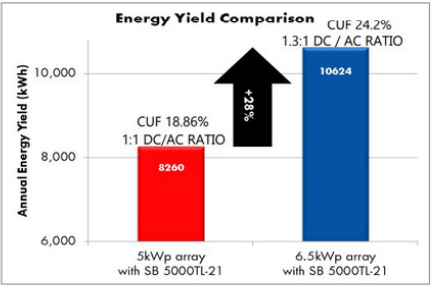
Graph showing Annual Energy Yield when connected 5kWp Solar PV Array and 6.5kWp Solar PV Array to 5kW SMA make Sunny Boy SB5000TL821 String Inverter. (SMA)
NECESSITY FOR OVER SIZE THE PV ARRAY
- To meet the normative Capacity Utilization Factor (CUF) of 21 set by CERC.
- Over sizing the PV array is a powerful tool for faster payback, optimizing the systemGs levelized cost of energy (LCOE) for long8term owners.
- Increase the PV system internal rates of return (IRR) for investors or developers.
- The role of the DC to AC ratio is to find an optimal balance of cost vs. performance.
- Medium and Large8scale producers of solar power get additional benefits from a high DC/AC ratio as the capacity of transformers, substations, interconnection equipment and other expensive project elements are defined by the AC output, and their cost is not affected when using a Solar PV array with a higher nameplate capacity.
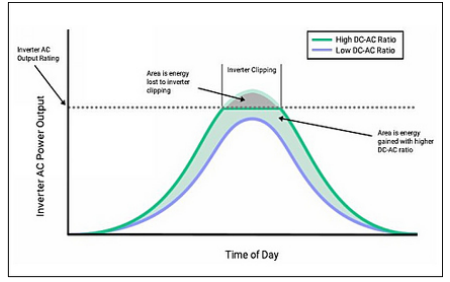
Increasing the DC/AC ratio (or) Inverter Loading Ratio enables the solar inverter to start the production in the early morning and extend the production till late evening. (Aurora)
KEY TAKEAWAYS
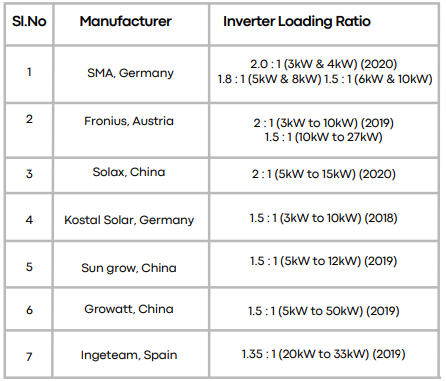
- The traditional design has been of a DC to AC ratio (or) Inverter Loading Ratio of 1.4: 1
- On other hand, oversizing a solar array beyond certain rating leads to Inverter clipping (or) Inverter saturation typically seen in PV systems that have high Inverter Loading Ratio greater than 1.4: 1 especially during mid8day.
- However, Inverters will generally never produce output more than their max8rated AC power. During times when the DC input power is too high, the inverter will adjust the operating parameters of the solar array and reduce the DC power. This is the key factor why Most of the countries including Bharat (CERC ¦ MNRE) follow Inverter Name plate capacity as the Roof top Solar PV Installed Capacity.
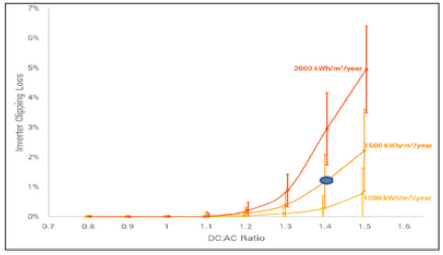
DC/AC Ratio (or) Inverter loading ratio of up to 1.4: 1, the clipping losses do not appear much in Solar PV String Inverters installed in Indian Sub8 Continent. (Solis)
RECOMMENDED INVERTER LOADING BY TOP MANUFACTURERS
CONCLUSION
- It is impossible to recommend an ideal DC/AC ratio (OR) Inverter Loading Ratio (ILR) in a world where Solar Insolation levels varies with coordinates.
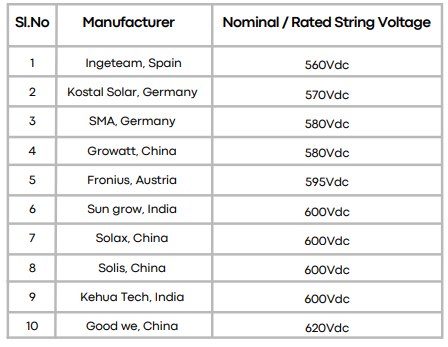
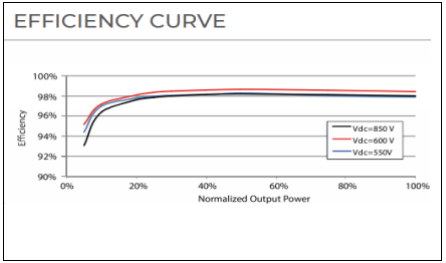
- If the voltage of the Solar PV array per MPPT is designed around the Rated / Nominal input Voltage of the Inverter, then the efficiency of the inverter will be very high and the power generation capacity will be close to the name plate capacity.
- Hence, most of the Developed countries set the regulation to match the Solar PV module string / Array Voltage to that of Nominal / Rated Input Voltage of the Solar PV String Inverter to arrive the no. of solar PV modules to be deployed.
- Countries like USA (600Vdc), Mexico (600Vdc), Japan (750Vdc), etc set the regulation to limit the Solar PV string / array size by maintain the DC string / array Voltage close to Nominal Input Voltage of the Inverter.
- Inverter Manufacturers like Goodwe and Kehua Tech specify Nominal / Rated Input Voltage rather the Inverter Loading Ratio (or) DC / AC Ratio.
NOMINAL / RATED INPUT VOLTAGE OF INVERTERS
ARTICLE OUTCOME
In a PV System with higher inverter loading ratio (1.2:1 to 1.4:1) the solar generation commences at early in the morning and extends till late in the evening as higher inverter loading ratio makes the inverter to reach the startup / Feed in voltage much faster in the morning and maintains minimum feed in voltage for the inverter till late evening there by delay / slower the inverter shut down. This is due to oversize the PV array compared with normal PV array (1:1 inverter loading ratio). This feature is very fascinating to The DISCOMS to deal with early morning (Between 7.00AM to 7.30AM) grid failures due to peak demand in the grid DISCOMs to meet evening peak demand due to extended generation in the evening. Consumers to get more energy with faster payback. In a PV system with Solar PV array voltage designed very close to the Rated / Nominal PV input Voltage of the Inverter, then higher energy yields for the entire day will be achieved. Faster payback to the prosumers Demand mitigation to the DISCOMs. DISCOMs can curtail their short term and long term high priced power purchases there by release the financial burden on their consumers.